
Short answer: Usually, yes. Many SMC-T claims were denied under a “higher level of care” rule that a federal court struck down in September 2024. Others came down to what the record didn’t show. Either way, you can ask again with a supplemental claim (VA Form 20-0995) and new evidence: your statement of the care you give, and where your veteran would be without it.
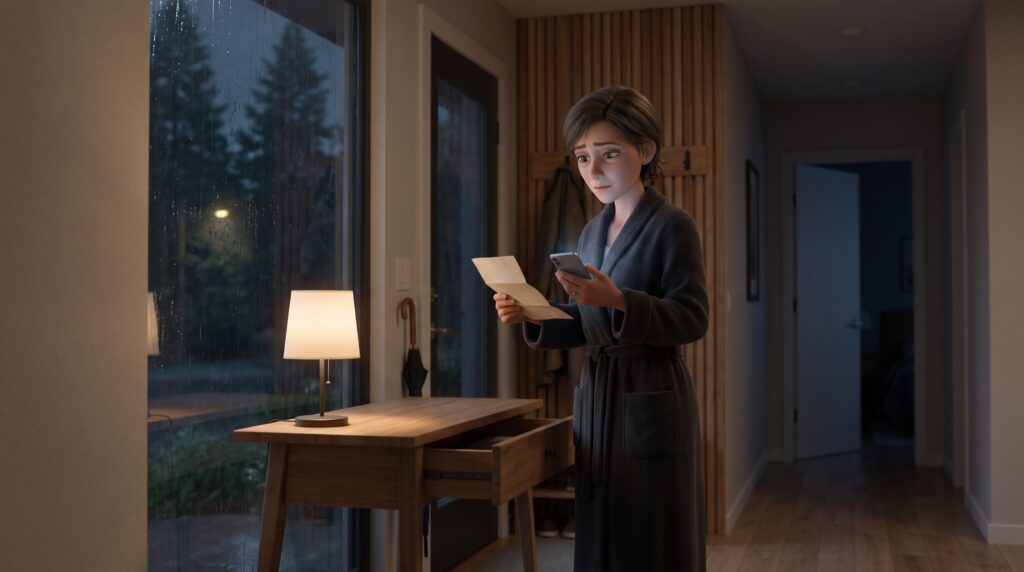
The letter said no.
You read it twice. You put it in a drawer. And you went back to doing the work.
Maybe it said the care had to come from a licensed professional. Maybe it said the need wasn’t there.
Pills to sort. A stove to check. A walk that ends two streets from home. The work didn’t stop when the letter came, and neither did the need.
Why was SMC-T denied when family gave the care?
The law asks one thing. VA’s rule asked for more.
Special Monthly Compensation for a brain injury, called SMC-T, is a level of special monthly compensation for veterans who need regular help from another person because of a service-connected traumatic brain injury. The law, 38 U.S.C. § 1114(t), asks whether your veteran needs regular aid and attendance (A&A) for the residuals of traumatic brain injury.
VA’s regulation required a “higher level of care.” That meant daily personal health-care services, the kind that take professional training, like injections or sterile dressings, given by a licensed professional or by someone supervised by a licensed professional. Family had to meet the same test, too.
So most families whose help is reminders, supervision and keeping a veteran safe were turned down, however many hours they gave.
If that’s why your veteran’s SMC-T claim was denied, the letter usually says so. Look for words like:
- “higher level of care”
- “personal health-care services”
- “licensed health-care professional”
- “38 CFR 3.352(b)” or “3.350(j)”
If you find those, then the reason VA gave you may no longer stand.
What changed in 2024?
In September 2024, the Court of Appeals for Veterans Claims decided Laska v. McDonough. It held that VA’s “higher level of care” requirement for SMC-T went beyond the law Congress wrote, and was invalid.
What’s left, then, is the law itself. To qualify for SMC-T, two things have to be true:
- Your veteran needs regular aid and attendance because of the service-connected brain injury. That’s help from another person, on a regular basis, with daily care or with staying safe from the hazards of an ordinary day.
- In the words of the law, “in the absence of such regular aid and attendance,” your veteran “would require hospitalization, nursing home care, or other residential institutional care.”
(There’s also a technical third requirement: your veteran can’t already be eligible for VA’s highest aid-and-attendance rate. For most TBI families it’s met, and checking it is your advocate’s job.)
Nothing in any of it asks for a license. I wrote more about the decision in Does the care I give count, or does it have to be a nurse?
Laska is the legal argument. Making it is your advocate’s job. Your job, instead, is the facts.
Who does what?
| What the family brings | What the advocate brings | |
|---|---|---|
| The question | What daily help your veteran needs | Whether VA applied the right law |
| The evidence | Your statement of an ordinary day, and where your veteran would be without you | The record review: the old decision, the exams, the treatment notes, the medical evidence |
| The law | You don’t have to argue it | Laska v. McDonough and 38 U.S.C. § 1114(t) |
| The form | Your signature and your words | The supplemental claim, with the issue named and the evidence attached |
| If VA says no again | Keep the notes going | The next step, often a Board appeal |
What if our denial said something else?
Not every SMC-T denial was about the license rule. Many claims are denied for a different reason:
- VA didn’t see a need for regular aid and attendance at all.
- The record didn’t show your veteran would need a hospital or nursing home without help.
The court’s decision doesn’t fix those. However, new evidence can.
Maybe a doctor already filled out the aid and attendance form, VA Form 21-2680, and VA still said no.
That form does ask, in block 29, whether your veteran requires nursing home care. However, the examiner answers from what they read and what they hear in the exam room. So with you in the house, the honest answer may look like no.
The real question is the one the law asks: in the absence of your help, where would your veteran be? Your statement can answer it. So can you, out loud, at the exam.
How do we ask VA again?
With a supplemental claim, on VA Form 20-0995.
A supplemental claim asks VA to decide again, with new and relevant evidence. “New” means VA hasn’t seen it. “Relevant” means it proves or disproves something in the claim. In fact, VA’s own page lists a lay statement, a letter from someone who saw what happened, as an example.
The evidence that answers most SMC-T denials is the one VA never really had: yours. Also, if you wrote a statement before, the new one needs facts the old one didn’t have, especially what would happen if you left.
On the form, name the issue plainly: SMC-T, aid and attendance for TBI residuals, 38 U.S.C. § 1114(t), with the date of the old decision. That’s because raters sometimes decide a different level of SMC and never reach the one you asked for.
If the decision is less than a year old, a Higher-Level Review or a Board appeal may also be open. Which one fits depends on why VA said no, so read the letter first, or have someone read it with you.
What should the new evidence say?
Two things. What you do. And what would happen if you stopped.
What you do
Write one ordinary day, hour by hour. For example: the medication you set out because otherwise it’s taken twice, checking the stove after every meal, going to appointments because what the doctor says won’t be remembered on the drive home. I walk through how to write it here.
For each task, say what the brain injury does that makes it necessary: memory, judgment, balance, temper. VA needs to see the help is due to TBI, not to something else.
What would happen if you left
This is the second half of the law, and the easiest to leave out.
If you left for a week, where would your veteran be?
Who would keep the house from catching fire? Who would notice the pills were taken twice? And who would go looking when your veteran didn’t come home from the walk?
If the honest answer is “no one,” say so, plainly. Then say what you think would happen: the hospital, a nursing home, a care facility. Say why, with things you’ve seen. For example, “The one time I was gone overnight, my sister found the stove on at 2 a.m.” is evidence. “My veteran can’t be alone” is a conclusion. The first one gives VA something to weigh.
As a caregiver, you’re the witness to the in-home hours nobody else sees. So a statement like that answers the second half of the law in your own words.
If your veteran already gets SMC-L for aid and attendance because of the TBI, VA has already found the first half. Your statement can then focus on the second.
What the medical evidence adds
Finally, if you can, add a doctor’s opinion, from a VA doctor or a non-VA doctor who knows your veteran. Ask for one sentence that matters most: whether, without this help, your veteran would need a hospital or nursing home, and that it’s because of the brain injury. Your statement shows the hours. The doctor explains why.
What does a winning record look like?
Here’s one real example, from a public Board of Veterans’ Appeals decision.
In January 2025, the Board granted SMC-T to a veteran with a brain injury. In the record were the partner’s statement of the care she gave, two private medical opinions, and a VA aid-and-attendance exam. The Board applied Laska and asked one question: without that help, would the veteran need a hospital or nursing home? Both the veteran’s own provider and the VA examiner said yes.
It’s one decision, not a promise, because every file is different.
But it shows what the Board looks for now: the need, the help, and where the veteran would be without it.
What if SMC-T is denied again?
It might be.
Regional offices don’t always apply SMC-T correctly, even now. A common answer: your veteran doesn’t qualify for SMC-T because they don’t need nursing home care, and here’s a smaller step up instead, an intermediate level of SMC between the aid-and-attendance rate and the next one. Another: SMC-T granted, but only from the date of the new claim.
Neither has to be the last word. In my work, these claims often end up at the Board of Veterans’ Appeals, where a judge reads the whole record and applies the court’s decision.
Still, a second no isn’t the end. You can ask the Board to review it.
That’s why the first filing matters so much. Everything you put in the record now is part of what a judge reads later.
Why it’s worth the trouble
SMC-T pays the same monthly rate as VA’s highest aid-and-attendance level: $11,491 a month in 2026 for a veteran with a spouse, in place of the 100% VA disability rate of $4,158. That’s a different life for a household doing this work every day.
What can you do tonight?
First, find the old letter. Look for the reason. Circle “higher level of care,” “personal health-care services,” “licensed,” or “3.352(b)” if you see them. If you have an old SMC-L award that never mentions SMC-T, set that aside too.
Then write one hour. The hardest hour of an ordinary day. What you did, why, and where your veteran would be if you weren’t there.
That’s a start on the evidence. After all, you’ve been gathering it for years. You just haven’t written it down yet.
If the letter in the drawer turned on a licensed professional, it answered a question the law no longer asks.
The question now is the one you’ve been answering every day.
Not sure where your family stands? I put together five yes/no questions you can answer tonight. Get the free SMC-T checklist and I’ll email it to you.
If you’d rather talk it through, book a free 30-minute call. Have the old letter nearby if you found it. If not, that’s fine. The first call can be just you.
Jerome Spearman, RN is a registered nurse and VA-accredited claims agent (accreditation No. 57690; look it up on VA’s site). He has been a nurse since 2009, in military trauma, neurosurgery, orthopedics and the operating room, and cared for wounded service members at Landstuhl Regional Medical Center during Iraq and Afghanistan. He helps families of veterans with TBI obtain Special Monthly Compensation (SMC-T). jerome@spearmanappeals.com · (253) 509-5587
Spearman Appeals is not affiliated with the Department of Veterans Affairs. This article is general information, not legal advice; eligibility depends on the facts of each case.
Sources
- Laska v. McDonough, No. 22-1018 (Vet. App. Sept. 6, 2024)
- 38 U.S.C. § 1114, rates of wartime disability compensation (subsection (t))
- VA: Supplemental Claims (VA Form 20-0995)
- VA Form 21-2680, Examination for Housebound Status or Permanent Need for Regular Aid and Attendance
- VA Special Monthly Compensation rates, effective December 1, 2025
- Board of Veterans’ Appeals decision A25006312 (Jan. 24, 2025)